
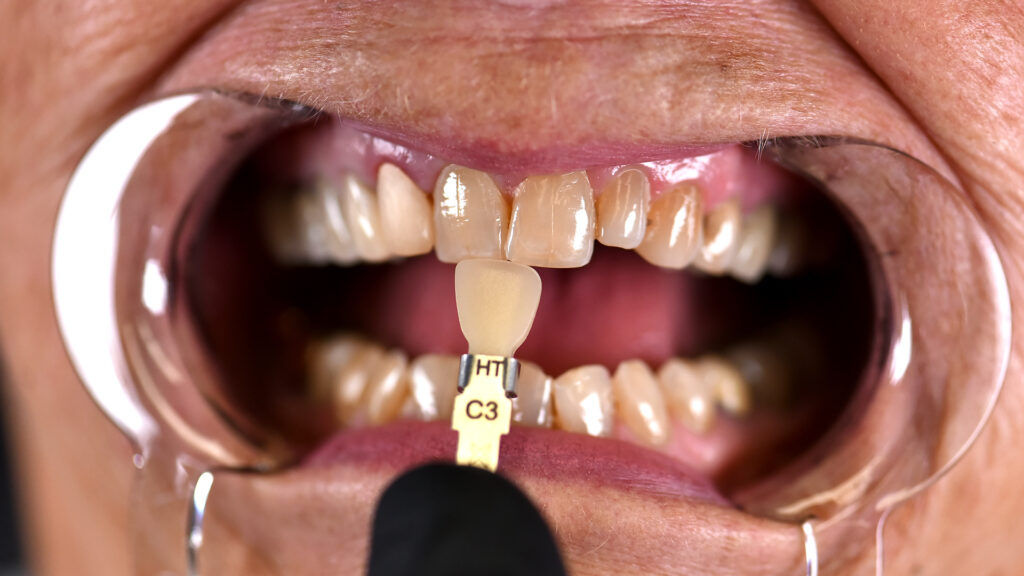
Why Tooth Shade Is More Than a Shade Guide
Matching a natural tooth is rarely as simple as finding the closest shade tab. Tooth color is influenced by much more than hue alone. Value, chroma, translucency, surface texture, hydration, lighting, surrounding teeth, and the way our eyes perceive color all play a role in how a tooth—and ultimately a restoration—looks. That is why achieving a natural-looking restoration requires more than simply selecting a shade. It requires understanding the environment in which that shade will ultimately be seen and the material it will be made of. The tooth doesn’t always look the same One of the biggest variables in shade matching is hydration. When a tooth becomes dehydrated, it appears lighter and can show a measurable change in color. This can happen surprisingly quickly during a dental appointment. Research has found that even short periods of dehydration can produce clinically perceptible color changes. This is one reason shade selection is generally recommended early in the appointment, before the teeth have been exposed to prolonged isolation or drying. In other words, the shade we see when a tooth is naturally hydrated may not be the shade we see later in the appointment. Lighting changes what we see Color doesn’t exist independently of light. The same tooth can appear different under natural daylight, operatory lighting, or other artificial light sources. Research on dental shade matching has demonstrated that lighting conditions can influence color perception and shade selection. The surrounding environment matters, too. Lip color, clothing, operatory colors, and even the background behind the tooth can influence how our eyes perceive its color. This is why controlled, neutral conditions are recommended when selecting a shade. Natural teeth aren’t one-dimensional A natural tooth is not simply “A1” or “B2.” It has variations in value, chroma, translucency, surface texture, and characterization. Enamel and dentin interact with light differently, and the incisal, middle, and cervical portions of a tooth can have noticeably different optical characteristics. Two teeth can share a general shade designation while still looking quite different. This is also why custom characterization can involve much more than adding a little color. Surface texture, translucency, staining, and the way light interacts with the restoration all contribute to the final appearance. Our eyes are part of the equation Visual shade matching is inherently subjective. Even when using standardized shade guides, different observers can perceive and select color differently. A systematic review of dental shade selection found that visual shade matching is influenced by multiple factors related to the observer, the lighting, and the object being evaluated. Digital and instrumental shade systems can improve consistency and repeatability, but they are not a substitute for clinical judgment. Research continues to show that shade determination is a complex process, with different measurement methods having their own strengths and limitations. So, can a restoration be guaranteed to match 100%? This is where shade matching becomes especially important for communication between the dental office and the laboratory. A shade or custom characterization can be carefully selected, documented, photographed, measured, and reproduced. All of those steps can improve predictability. But there are variables that cannot be completely controlled outside the patient’s mouth. The restoration will ultimately be viewed: That means a restoration can be meticulously created and still appear different once it is placed in the mouth. The final clinical environment is part of the shade match. A better way to think about shade Rather than thinking of shade as a single number, it may be more useful to think of it as a combination of information. A good shade record can include: Shade + photographs + hydration + lighting + surrounding teeth + characterization details The more information the dental team can provide, the more completely the laboratory can understand the desired result. At GloDental, we believe the goal isn’t simply to reproduce a shade tab. The goal is to create a restoration that looks natural within the patient’s individual smile. And sometimes, the most important part of achieving that result is recognizing what cannot be perfectly predicted until the restoration is actually in the mouth. References
Why Tooth Shade Is More Than a Shade Guide Read More »